Newsletter Subscribe
Enter your email address below and subscribe to our newsletter

 ByJohn A
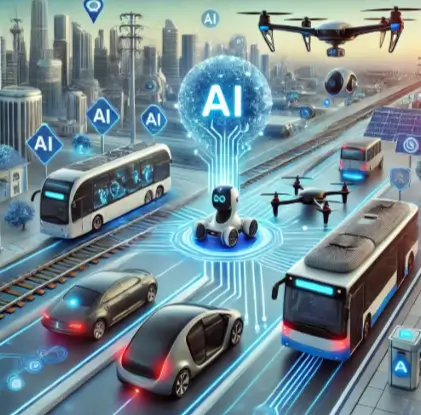
Artificial intelligence is reshaping transportation by turning data into actionable systems. Predictive analytics anticipate demand and maintenance needs, while dynamic routing adapts in real time to conditions. Sensor fusion and autonomous perception enhance safety and decision accuracy. Freight orchestration aligns capacity with demand, reducing waste and improving reliability. Governance and ethics ensure privacy and resilience, creating safer corridors and empowered users. The journey toward a data-driven transit ecosystem continues, inviting closer scrutiny of what comes next.
AI enables transportation systems to anticipate demand, optimize routes, and balance loads in real time. The approach integrates predictive maintenance and autonomous fleets, reducing downtime and elevating reliability. Real-time analytics reveal patterns, guiding investments in resilient infrastructure. The result is liberated mobility: adaptive networks, safer corridors, and transparent performance metrics that empower users to navigate a dynamic, data-driven transit landscape with confidence.
Sensors collect an ever-growing stream of signals—images, lidar, radar, acoustics, and environmental data—that feed a perception stack designed to discern objects, obstacles, and context with increasing fidelity.
From raw inputs to robust situational models, AI enables autonomous insight through sensor fusion, enabling decisive action while honoring data ethics. This clear, future-oriented approach empowers freedom-driven transportation with trusted perception systems.
See also: rightnowpathnet
Optimizing movement hinges on intelligent routing, scheduling, and freight orchestration that transform disparate signals into coordinated logistics. The approach emphasizes routing optimization and dynamic capacity forecasting, aligning fleets with demand signals and real-time constraints. AI enables predictive freight forecasting, adaptive platooning, and synchronized mass transit, creating a future where autonomous decision cycles reduce empty miles, enhance reliability, and expand freedom through efficient, resilient networks.
The integration of intelligent transportation systems raises questions of safety, ethics, and resilience as fleets, sensors, and autonomous decision engines scale across urban and rural networks.
Data-driven risk models illuminate privacy concerns and bias mitigation needs, guiding transparent governance.
Ethical frameworks enable resilient redundancy, cybersecurity, and human oversight, while forward-looking standards foster trust, adaptability, and freedom to innovate within safe, equitable mobility ecosystems.
AI systems in transit networks enforce privacy policies, emphasize data minimization, and apply anonymization techniques, ensuring secure transmission; ethics governance guides decisions, enabling freedom-oriented innovation while safeguarding riders, data integrity, and trust in future mobility ecosystems.
The costs and ROI of AI for transportation reflect cost efficiency gains and ROI metrics, tempered by data privacy concerns and regulatory hurdles, while unlocking multimodal performance, assessing human replacement potential, and sustaining future-oriented, freedom-seeking innovation.
Like a compass guiding streets, AI cannot fully replace human roles in transportation. It enables autonomous ethics, human-robot collaboration, and scalable fleets, empowering freedom while data-driven systems shape a future where humans oversee, refine, and redefine mobility.
AI evaluation across multimodal systems leverages AI evaluation metrics, multimodal benchmarks, and privacy concerns to quantify performance; rising cost ROI, regulatory hurdles, and workforce replacement shape strategic decisions, guiding a future-oriented, data-driven trajectory with freedom-focused stakeholders.
Regulatory hurdles exist as friction and impetus, juxtaposing caution with ambition. Regulatory impact shapes deployment timelines while compliance frameworks establish guardrails; yet data-driven, visionary standards enable freedom in innovation across transport AI ecosystems.
Artificial intelligence steers transportation toward a future where data and destiny align. Like a quiet conductor in a vast orchestra, AI harmonizes sensors, routes, and freight into cohesive, resilient flows. As predictive insights crystallize into real-time decisions, cities breathe easier and travelers reach destinations faster with fewer detours. With transparent governance and ethical safeguards, this ecosystem evolves into a sustainable, adaptive transit commons—where autonomous perception and human oversight co-create safer, smarter corridors for generations to come.